
Masonic Beginnings
Although no-one can give an exact date for the formation of Freemasonry, many believe the origins of Masonry can be traced back to the building of Kind Solomons Temple in ancient Jerusalem, which according to the Hebrew Bible, was first built in the fourth year of King Solomon’s era (around 970 BCE).
It is believed that the temple which measured sixty cubits long, twenty wide, and thirty high, a cubit being the measurement of a mans forearm or in todays measurements 18 inches or 44 cm. It is reported that over 80,000 stonecutters or Masons were employed in its building over the 7 year period it took to erect the temple.
Much of modern day masonry is based on the building (and Rebuilding – Royal Arch) of King Solomon’s temple, indeed the Master of any given Masonic Lodge is installed into the chair of King Solomon. 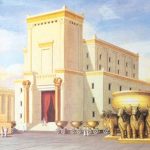
The temple holds many references to how men even in those day should conduct themselves in daily life, sadly many of which in todays society have been forgotten. This is one of the reasons why Masonry still uses these references and conduct ourselves on the 3 cornerstone principles of masonry
 Brotherly Love
Every true Freemason will show tolerance and respect for the opinions of others and behave with kindness and understanding to his fellow creatures.
Relief
Freemasons are taught to practise charity and to care, not only for their own, but also for the community as a whole, both by charitable giving and by voluntary efforts and works as individuals.
Truth
Freemasons strive for truth, requiring high morals standards and aiming to achieve them in their own lives.
The First Grand Lodge
The early history of Grand Lodge is uncertain, since no minutes were taken until 1723. It is known that the four lodges mentioned above held an assembly at the Goose and Gridiron, in St Paul’s Churchyard, on, 24 June 1717 (the Feast of St. John the Baptise). 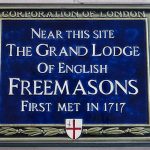 They agreed to restore their “Quarterly Communications”, four meetings a year for the transaction of masonic business, and an annual assembly to elect the next Grand Master. At this meeting, they elected Anthony Sayer, Master of the lodge at the Apple Tree, of whom little else is known, and the Grand Lodge of London and Westminster was born. At this stage, it is unlikely that they saw themselves as anything more than an association of London lodges. This perception was to change very rapidly.
The next year, George Payne became Grand Master. He was a career civil servant with the commissioners of taxes. In 1719, they elected John Theophilus Desaguliers, a clergyman, an eminent scientist, and a Fellow of the Royal Society. The last commoner to serve as Grand Master was George Payne in his second term of office in 1720/21, when he wrote The General Regulations of a Free Mason which were later incorporated in Andersons’s Constitutions. Thereafter, in what appears to be a deliberate attempt to raise the profile of the organisation, all the Grand Masters have been members of the nobility.
Desaguliers is often described as the “father” of modern freemasonry. It was Desaguliers who inscribed the dedication to Anderson’s Constitutions, headed the committee which directed and approved them, and supplied the “Gothic Constitutions” from which they were formed. Although he only served one term as Grand Master, he was twice Deputy Grand Master under figurehead Grand Masters, and at other times behaved as if he was Grand Master, forming irregular lodges to conduct initiations. It seems to have been Desaguliers who insisted that ritual be remembered rather than written down, leading to a dearth of material on the development of English ritual until after the formation of United Grand Lodge.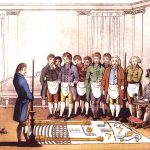
These considerations cause many masonic historians to see him as the guiding intelligence as the new Grand Lodge embarked on an era of self-publicity, which saw the sudden expansion of speculative masonry, with a corresponding rise in anti-masonic groups and publications. Initiations began to be reported in newspapers. The noble grand masters were often fellows of the Royal Society, but the Duke of Wharton (1722–23) had just had his Hell-fire club shut down by the government, and joined, or possibly formed, an anti-masonic group called the Gormagons almost as soon as he left office. From 1721 the installation of the new Grand Master was the occasion for a parade, originally on foot, later in carriages. This became the subject of some ridicule, until starting in 1740 there were also mock processions by anti-masonic groups, leading to the discontinuation of the practice in 1747. The rapid expansion of freemasonry also led to many new lodges failing after only a year or two. In addition to attacks from outside the craft, there were now disillusioned ex-masons willing to make money out of “exposures” of freemasonry
 Freemasonry today has a global appeal and as society become more fragmented the fundamentals of Freemasonry help restore that balance by promoting charity and self improvement.
That does not mean it is all work and no play, above all else, Freemasonry must be enjoyed and often this means that a Brother can indulge and conjoin his personal interest with that of other Freemasons.
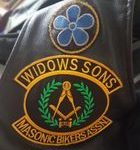 Freemason Lodges come in all flavours from those who are interested in sporting activities like Golf, Rugby and Football to Music, Motorbikes and there is even a lodge dedicated to Comedians and actors, for which many famous celebrities are members.
There are now even lodges which are linked to University so that our younger generation (who want to make a difference) can do so with their friends whilst studying. The Masonic Fishing Charity helps disabled and special needs children, people with disabilities and war veterans who may not get the opportunity to get outside to experience the great outdoors and maybe even catch the odd fish or two (if lucky).
Freemasons learn from the past, to live for today and help the needs of others, but also have one eye to the future….
Freemasons are already a very open and transparent organisation and in these day of modern communications and social media are trying even harder to ensure we are understood properly. For example, copies of its aims, constitutions and rules are freely available and the United Grand Lodge of England’s website at www.ugle.org.uk contains a wealth of information on everything from the historical foundations of the organisation to the layout of a typical Lodge room.
Individuals are completely free to acknowledge their membership and are actively encouraged to do so and be visible in our communities.
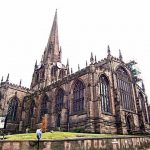 Freemasonry in Rotherham is delighted to be associated with the town and strives to make Rotherham a better place for our families to live and work. We do this by providing whatever relief to suffering where we can do and to live our lives in a good and worthy manner.
We sincerely hope this website has gone someway to convince you we are just ordinary men of South Yorkshire, proud of our upbringing and heritage, masonry just makes good men better.